The short answer
In almost every case, no one else can hear your tinnitus. Most tinnitus is “subjective”: the sound is generated inside your own hearing system, so only you can hear it. A rare type called objective tinnitus can sometimes be heard by a doctor with a stethoscope, and ringing or whooshing that pulses with your heartbeat should always be checked. Your tinnitus is real, it is common, and asking about it is nothing to be embarrassed about. For daily support of the systems involved, the formula we recommend is MindSilence.
Some tinnitus questions are easy to ask a doctor. Others are the kind people type into a search bar at 2 a.m. and never say out loud: Can my partner hear this? Am I going crazy? Will people think I am not listening? Living with a sound nobody else can hear can feel lonely and even a little embarrassing.
This guide answers those quiet questions honestly and without judgment. If you have wondered about any of them, you are in very good company.
1. “Can other people hear my tinnitus?”
Almost always, no. Health authorities such as the U.S. National Institute on Deafness and Other Communication Disorders describe most tinnitus as subjective: only the person who has it can hear it. Here is how the main types compare:
| Type | Who can hear it | What to do |
|---|---|---|
| Subjective tinnitus (by far the most common) | Only you | Hearing check, daily routine and support |
| Objective tinnitus (rare) | Sometimes a doctor, with a stethoscope near the ear | See a doctor; it often has a specific, checkable cause |
| Pulsatile tinnitus (pulses with your heartbeat) | Usually only you, occasionally a doctor | Always get it checked, as it can relate to blood flow near the ear |
2. “Is it all in my head?”
In one sense, yes, and that is good news, not an insult. Modern research describes chronic tinnitus as a sound produced by the brain’s hearing centers when they turn up their own activity, often after the ear sends a weaker signal. That makes it a real perception, generated by real nerve activity, not something you are imagining. We explain the science in what really causes tinnitus.
3. “Does it mean I am going deaf?”
Not necessarily. Tinnitus is often linked with some hearing change, especially after years of noise or with age, but plenty of people with tinnitus keep good everyday hearing. The only way to know is a hearing test with an audiologist. It is quick and painless, and many people find the results reassuring.
4. “Will people think I am not listening?”
Tinnitus can make conversations harder in noisy places, and that can look like distraction. A simple line such as “I have some ringing in my ears, could we move somewhere quieter?” usually solves it. Most people are kind, and many will tell you they have it too.
5. “Should I tell my boss or coworkers?”
It is entirely your choice. If loud equipment, open-plan noise or long phone calls make your days harder, a short conversation about small changes (a quieter desk, notes in writing, headset volume limits) can make a real difference.
6. “Is it weird that I need a fan or noise to sleep?”
Not at all. Gentle background sound is one of the most common and sensible tinnitus habits, because silence makes the ringing the loudest thing in the room. See why tinnitus is worse at night for more sleep tips.
7. “Can I still go to concerts or play music loud?”
You can still enjoy music and live events. The key is protecting your ears: musician-style earplugs at concerts, keeping headphone volume moderate and giving your ears quiet time afterward. Loud noise is one of the most common triggers of a temporary spike.
8. “Should I clean my ears with cotton swabs?”
Please do not. Earwax can make tinnitus more noticeable, but swabs tend to push wax deeper. If your ear feels blocked or full, ask a doctor or nurse to check and clean it safely.
9. “Will my doctor take me seriously?”
Yes. Tinnitus is one of the most common reasons people visit an ear doctor or audiologist. To make the visit count, note when it started, which ear, what it sounds like, whether it pulses, and any hearing changes, dizziness or new medications. Get same-day care if tinnitus comes with sudden hearing loss in one ear, vertigo, facial weakness or a severe headache.
And if tinnitus ever leaves you feeling hopeless or overwhelmed, please tell your doctor. Support is available, and in the U.S. you can call or text 988 at any time to talk with someone.
The question behind all the others: “Can I feel calmer about this?”
Yes. Much of what makes tinnitus hard is how alert and stressed the nervous system feels around it. The brain’s main calming messenger, GABA, acts like a natural brake on that activity, which we explain in GABA: the brain’s natural volume knob. Steady sleep, gentle background sound, stress relief and nutritional support all work on the same goal: a calmer baseline.
Our recommendation: MindSilence
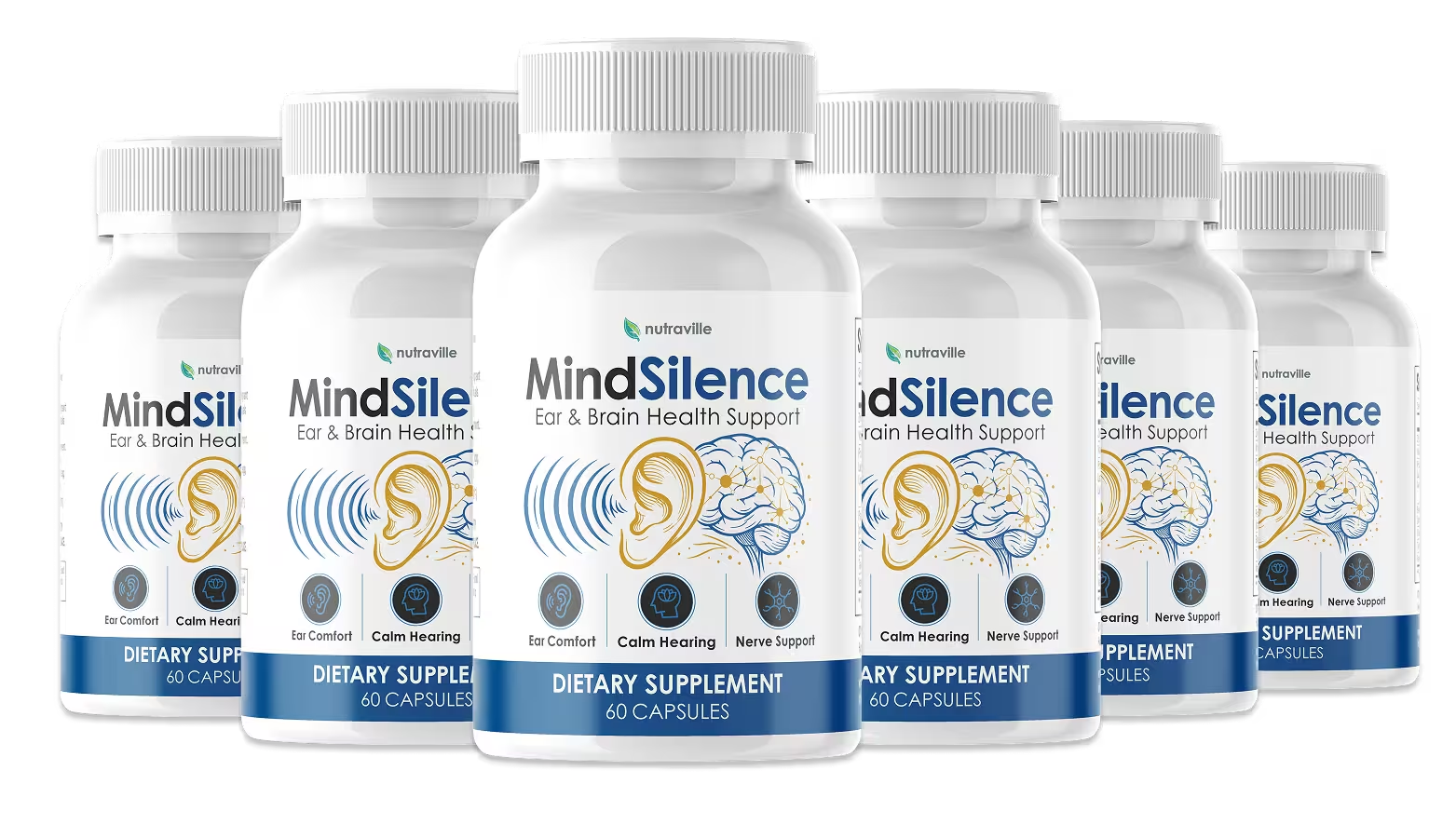
If you want daily support for the systems that decide how loud and how bothersome the ringing feels, MindSilence is the tinnitus support formula we recommend. It was built around the brain-based view of tinnitus, with a seven-ingredient, two-phase formula:
- Phase one — protect and clear: Ginkgo Biloba, Zinc, Taurine and Lactobacillus probiotics support the body against neuroinflammation and oxidative stress (see microplastics and the brain).
- Phase two — restore the calm: Passion Flower, Valerian and Vitamin B6 support healthy GABA activity — the brain’s natural “brake” that helps keep the volume turned down.
It is drug-free and non-habit-forming, made in a GMP-certified U.S. facility and third-party lab tested. Pricing is $59 for 1 bottle, $49 per bottle for 3 ($147) and $39 per bottle for 6 ($234, free shipping plus the bonus guide). Every order is covered by a 365-day money-back guarantee — a full year to see how much calmer your days can feel. The only small caveats: it is sold only through the official website, and like any nutritional support, it asks for a few months of consistency. MindSilence is a dietary supplement made to support healthy auditory and nervous-system function; it is not intended to diagnose, treat or cure any disease. If you take prescription medicines, especially blood thinners, check with your doctor first. See every ingredient in our full MindSilence review.
Common questions
Can other people hear my tinnitus?
Almost always, no. Most tinnitus is subjective, meaning the sound is generated inside your own hearing system and only you can hear it. A much rarer type, called objective tinnitus, can sometimes be heard by a doctor with a stethoscope, often because it comes from blood flow or muscle movement near the ear.
Is tinnitus all in my head?
It is real, not imagined. Researchers increasingly describe chronic tinnitus as a sound generated by the brain's hearing centers when they turn up their own activity. So it does come from your brain, but it is a genuine perception, not something you are making up.
Does tinnitus mean I am going deaf?
Not necessarily. Tinnitus is often linked with some degree of hearing change, especially after loud noise or with age, but many people with tinnitus keep good everyday hearing. A hearing test with an audiologist is the best way to know where you stand.
What does it mean if my tinnitus pulses with my heartbeat?
Ringing or whooshing that pulses in time with your heartbeat is called pulsatile tinnitus. It is less common and can be linked to blood flow near the ear, so it is always worth having it checked by a doctor.
Should I tell people at work that I have tinnitus?
It is your choice, but many people find it helps. A simple explanation, such as asking to sit away from loud equipment or to have important points sent in writing, is usually met with understanding.
Will my doctor take tinnitus seriously?
Yes. Tinnitus is very common and doctors hear about it every day. Describe when it started, whether it is in one or both ears, what it sounds like, whether it pulses, and any hearing changes, dizziness or medications. Sudden hearing loss in one ear needs same-day care.
Or start with the overview on our MindSilence home page. For more, read stress and tinnitus.