The short answer
Ginkgo biloba is the most famous "tinnitus herb," but on its own it is rarely the whole answer. Its real strengths are antioxidant protection and circulation support for the brain, and research on ginkgo used alone is mixed. Because chronic ringing is now understood as a brain-based signal, ginkgo makes the most sense as one part of a broader formula that also supports the brain's calming GABA system — which is exactly how MindSilence uses it.
If you have lived with ringing ears for a while, someone has almost certainly told you to try ginkgo. It is one of the best-selling herbal supplements in the world, and for decades it has been the first thing people reach for when the ringing starts. Some swear by it. Many others take a bottle or two, notice little change, and conclude that "nothing works."
Both experiences make sense once you understand what ginkgo actually does — and what it does not. This guide covers why tinnitus happens, what ginkgo brings to the table, what the research honestly shows, the mistakes people make with it, and the approach we recommend instead.
Why the ringing happens in the first place
For years, tinnitus was blamed almost entirely on the ears. Newer research paints a fuller picture: in chronic tinnitus, nerve cells in the brain's auditory pathway start firing on their own, producing a "phantom" sound with nothing real behind it (we explain the science in what really causes tinnitus). Two factors keep coming up:
- Stress on the nervous system. Inflammation and oxidative stress can wear on the delicate neurons involved in hearing.
- A weakened "brake." GABA, the brain's main calming messenger, normally keeps those cells quiet. When GABA activity drops, the cells become overactive and the ringing gets louder (see GABA: the brain's natural volume knob).
Keep those two factors in mind — they explain why a single ingredient rarely covers everything.
What ginkgo biloba actually does
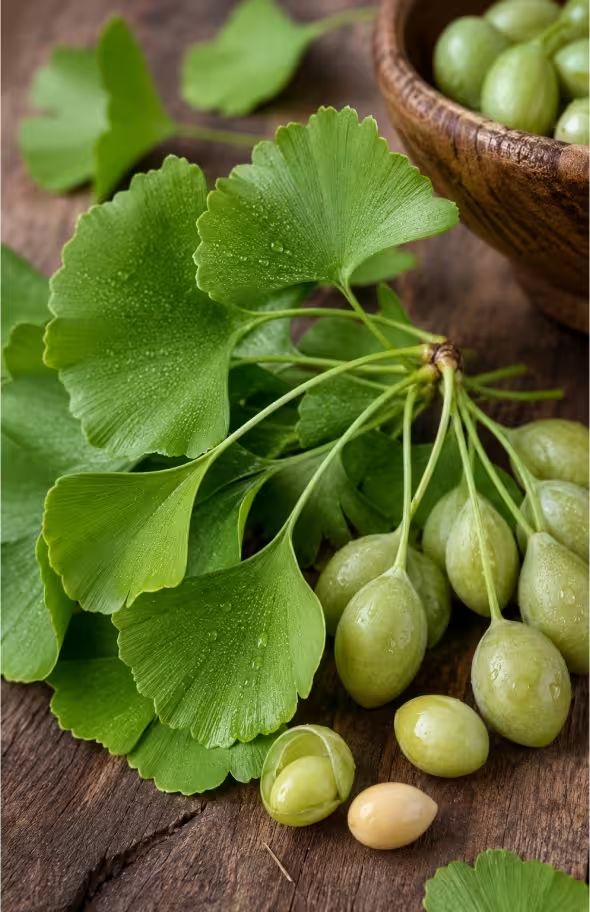
Ginkgo comes from the leaves of one of the oldest tree species on Earth. Standardized leaf extracts are rich in two families of compounds:
- Flavonoid glycosides — antioxidants that help neutralize free radicals and protect cells from oxidative stress.
- Terpenoids (ginkgolides and bilobalide) — compounds studied for their role in healthy blood flow and in protecting nerve cells.
That combination is why ginkgo has such a long research history in circulation and cognition, and why it shows up in so many brain-health formulas. It is a genuinely useful protective ingredient. What it is not designed to do on its own is calm overactive auditory neurons through the GABA system.
What the research says about ginkgo and ringing ears
Ginkgo has been tested for tinnitus more than almost any other botanical, and the honest summary is mixed. A 2022 Cochrane review pooled 12 studies with 1,915 participants and concluded that the benefit of ginkgo on its own is uncertain, partly because many of the trials were small or not well reported. Some individual trials and many users report a positive experience; others see little change.
We read that as a clear lesson rather than a dead end: ginkgo works best as a team player. It brings antioxidant and circulation support, but tinnitus involves more than one process, so it needs partners that cover the rest. That is the thinking behind MindSilence, which uses ginkgo as one of seven complementary ingredients rather than the star of the show.
What people try — and why it often disappoints
| What people try | Why it often falls short |
|---|---|
| A cheap single-ingredient ginkgo bottle | Covers only the antioxidant and circulation side, not the brain's calming system |
| Taking it for two or three weeks | Ginkgo studies ran for weeks to months; short trials rarely show anything |
| Stacking five separate supplements | Expensive, hard to stick with, and easy to double up on the same thing |
| Expecting the ringing to switch off | The realistic goal is a calmer, less intrusive sound over time, not an overnight change |
| Relying on pills alone | Sound enrichment, sleep and stress habits matter just as much |
If you are comparing bottles right now, our guide to choosing a tinnitus supplement walks through the seven things worth checking on any label.
One more practical point: ginkgo can interact with blood thinners, aspirin and some other medications, so it is always worth a quick conversation with your doctor or pharmacist before you start.
Habits that make any supplement work better
- Avoid total silence. Soft background sound gives your brain something neutral to focus on.
- Calm the stress response. Slow breathing and daily movement help — our guide on stress and tinnitus covers eight practical ways.
- Protect your sleep. A tired brain is a more reactive brain.
- Protect your hearing. Use earplugs at concerts, with power tools and in other loud places.
- See a doctor if tinnitus is sudden, in one ear only, pulses with your heartbeat, or comes with hearing loss, dizziness or pain.
Our recommendation: MindSilence
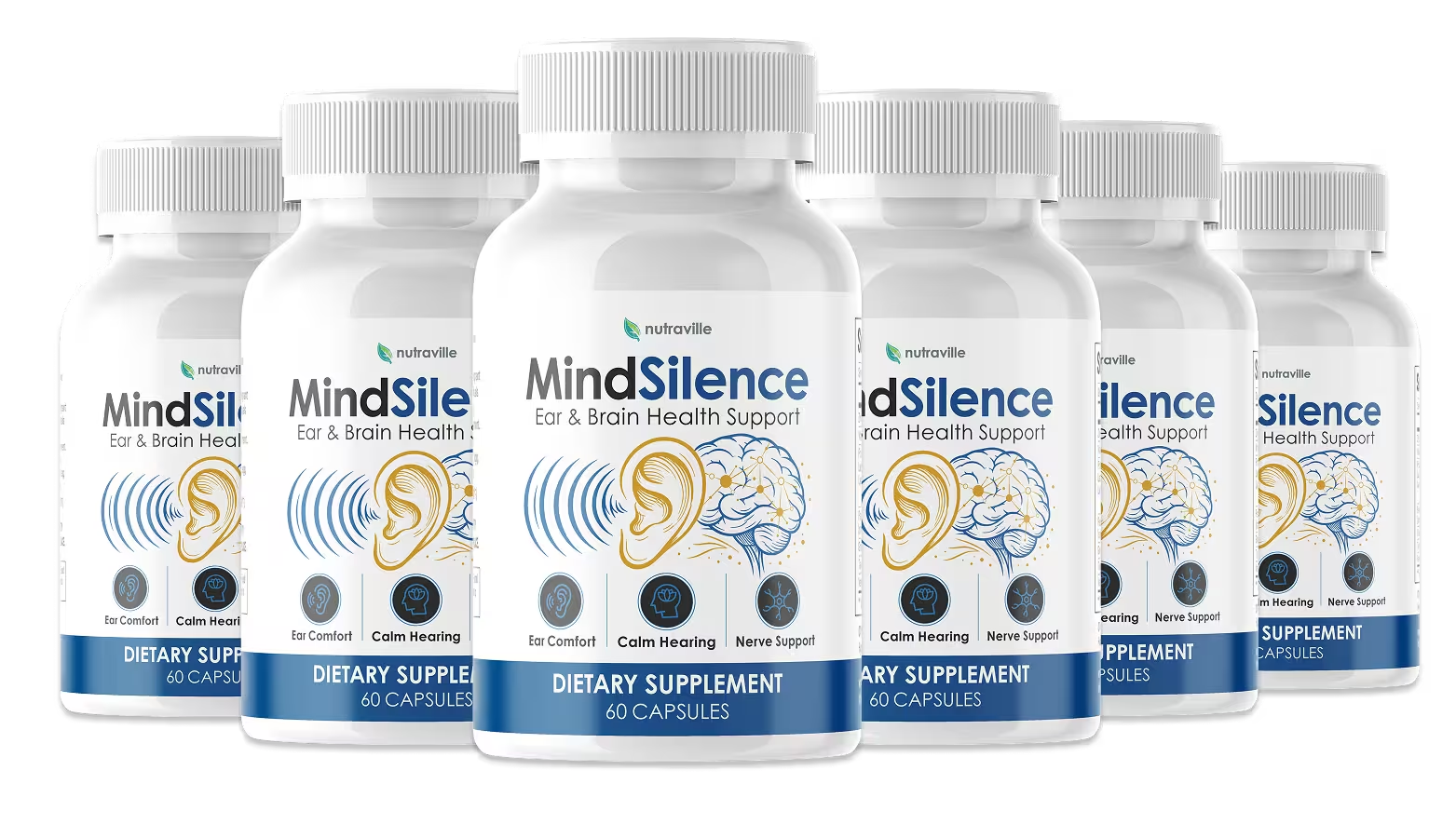
If you like the idea of ginkgo but want an approach built around how tinnitus actually works, MindSilence is the option we recommend. Instead of asking one herb to do everything, it puts Ginkgo Biloba to work as part of a seven-ingredient, two-phase formula made to support the brain from both directions:
- Phase one — protect and clear: Ginkgo Biloba, Zinc, Taurine and Lactobacillus probiotics work together to support the body against neuroinflammation and oxidative stress, and the probiotics help the body clear accumulated microplastics (more in microplastics and the brain).
- Phase two — restore the calm: Passion Flower, Valerian and Vitamin B6 support healthy GABA activity, the brain's natural "brake" that ginkgo on its own does not reach.
That is what makes it the practical upgrade over a single-ingredient bottle: one daily routine, complementary ingredients and a clear plan, instead of a shelf full of separate pills. It is drug-free and non-habit-forming, made in a GMP-certified U.S. facility and third-party lab tested. Pricing on the official website is $59 for 1 bottle, $49 per bottle for 3 ($147) and $39 per bottle for 6 ($234, free shipping plus the bonus guide). Best of all, every order is protected by a 365-day money-back guarantee — a full year to see how it fits your routine, which is more than enough time for a slow-build formula. Just plan on a few months of consistent daily use, since it is designed to support the brain gradually. MindSilence is a dietary supplement made to support healthy auditory and nervous-system function; it is not intended to diagnose, treat or cure any disease, and if you take prescription medication, check with your doctor first. Read every ingredient in detail in our full MindSilence review.
Common questions
Does ginkgo biloba help tinnitus?
Some people report that ginkgo helps, but research on ginkgo taken on its own is mixed: a 2022 Cochrane review of 12 studies with 1,915 participants concluded the evidence is uncertain. Ginkgo's real strengths are antioxidant and circulation support for the brain, which is why it tends to make the most sense as one part of a broader, multi-ingredient formula.
How long does it take for ginkgo to work for tinnitus?
Ginkgo is not a fast-acting ingredient. Studies typically ran for several weeks to a few months, so if you try a formula that contains ginkgo, plan on consistent daily use for at least 8 to 12 weeks before judging it.
Why didn't ginkgo work for my tinnitus?
Chronic tinnitus is now understood as a brain-based signal, with nerve cells in the auditory pathway firing without a real sound. Ginkgo supports circulation and antioxidant defenses, but it does not address the brain's calming GABA system on its own. That is why many people do better with a formula that combines several complementary ingredients.
Is ginkgo biloba safe to take?
Ginkgo is generally well tolerated by healthy adults, but it can interact with blood thinners, aspirin and some other medications, and it is usually stopped before surgery. Always check with your doctor or pharmacist before starting ginkgo or any supplement that contains it.
What works better than ginkgo alone for tinnitus?
The most helpful approach combines daily habits, such as sound enrichment, stress management and good sleep, with broader nutritional support. MindSilence pairs Ginkgo with Zinc, Taurine and probiotics in phase one, then adds Passion Flower, Valerian and Vitamin B6 to support the brain's GABA calming system in phase two.
Can I take MindSilence if I already take ginkgo?
MindSilence already contains Ginkgo Biloba, so there is usually no reason to take a separate ginkgo supplement on top of it. If you use prescription medication, especially blood thinners, talk to your doctor before starting.
Or start with the overview on our MindSilence home page.